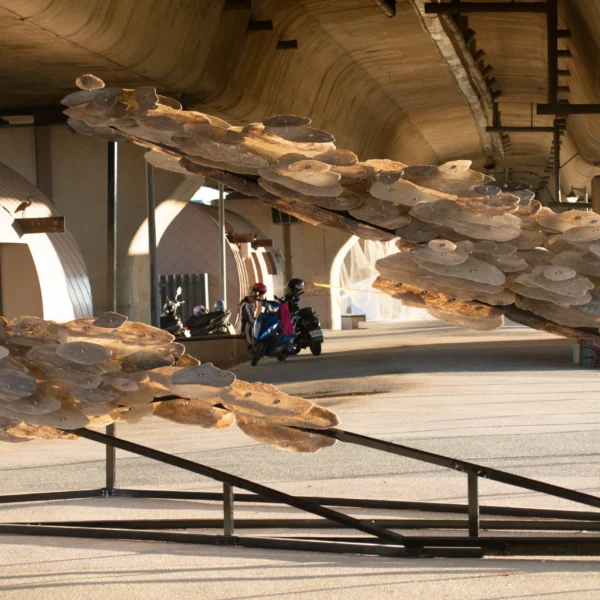
Floating Stratum Project

漂浮地層計畫|2024–


Rocks record history; plastics remember our present.


Plastic has been mass-produced since the 1930s. To the Earth, a hundred years is merely an instant, yet plastic has already become part of the land and the coastline, a geological marker of human existence.

The Floating Stratum Project begins by collecting discarded polystyrene from Taiwan’s coastline and shaping it into stones, exploring the traces humans leave behind from a geological perspective. “Flotsam” points to the severity of today’s waste problem, while “strata” imagine how people in the future might look back on our present.

In the Devonian period, plant fibers were as hard to break down as today’s plastics. As the line between natural products and man-made objects begins to blur, we try to transform the image of polystyrene as an artificial product, and to consider the end of the world and the shape of the future from a perspective beyond anthropocentrism.

Each time it is shown, the work responds to its site and materials: swaying in the sea wind, reborn at a lantern festival, or compressed into new layers of rock.
Exhibitions

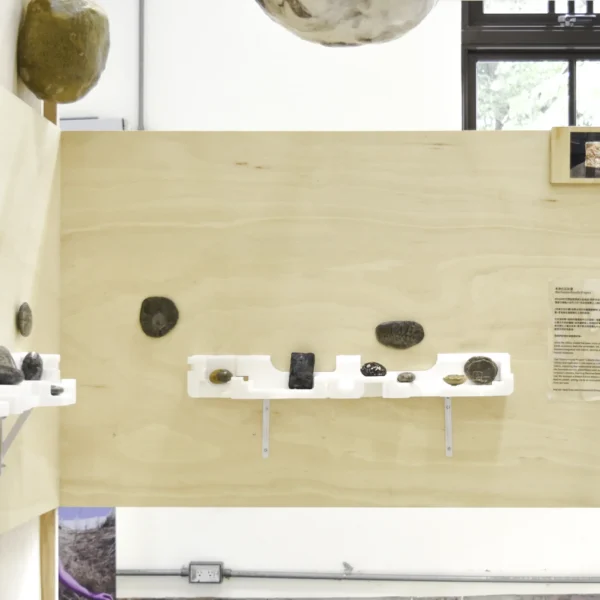
漂浮地層計畫-化石

The starting point of the series. Transparent elastic supports hold the polystyrene stones in the air, letting the “strata” float in space.

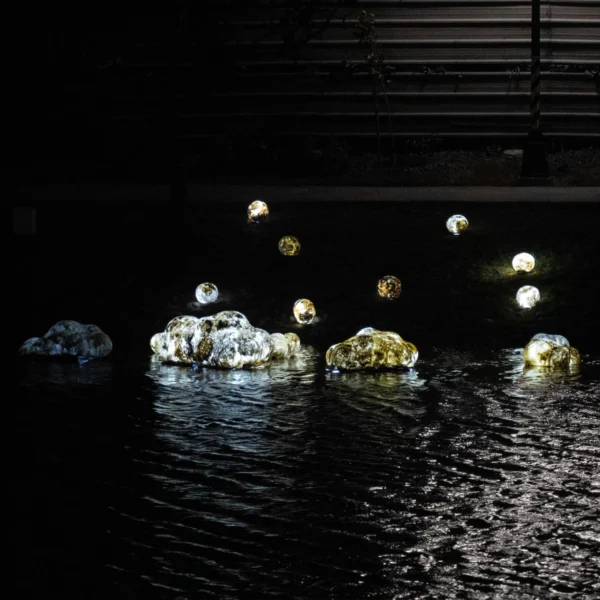
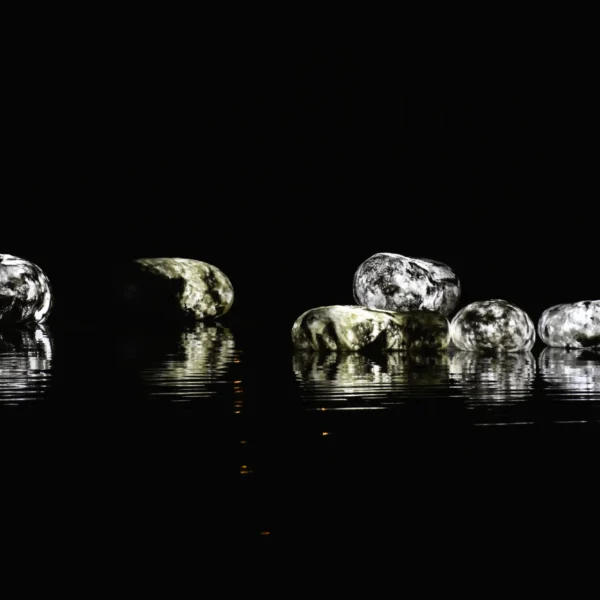
木子一十一工作室於2024年受邀參加竹北燈節,作品夜間效果

The polystyrene stones float on water. The strange sight of floating stones reveals the contrast between their apparent weight and the lightness of their material.

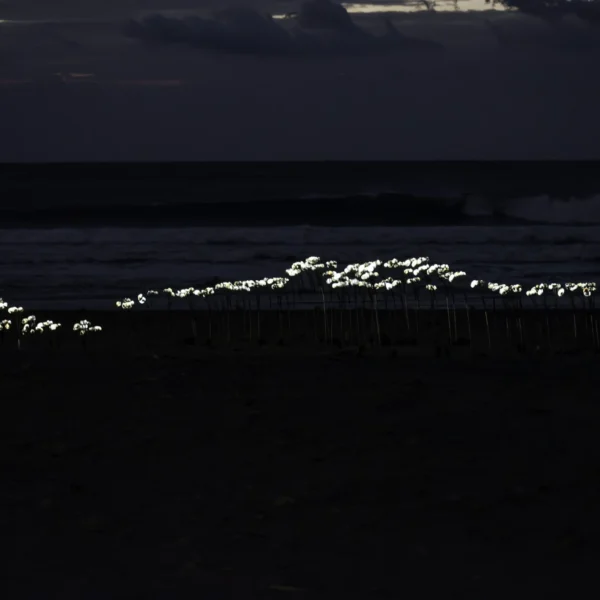
木子一十一工作室於2024年受邀參加落山風藝術季,作品晚上效果

Moved outdoors, the work sways in the Luoshanfeng winds, alongside real-world “plastic stones” such as pyroplastic and plastiglomerate.

木子一十一_leewang studio_2024藝術自由日_展場03

A speculative turn: imagining future organisms that feed on plastic, and the new ecosystems they might create.

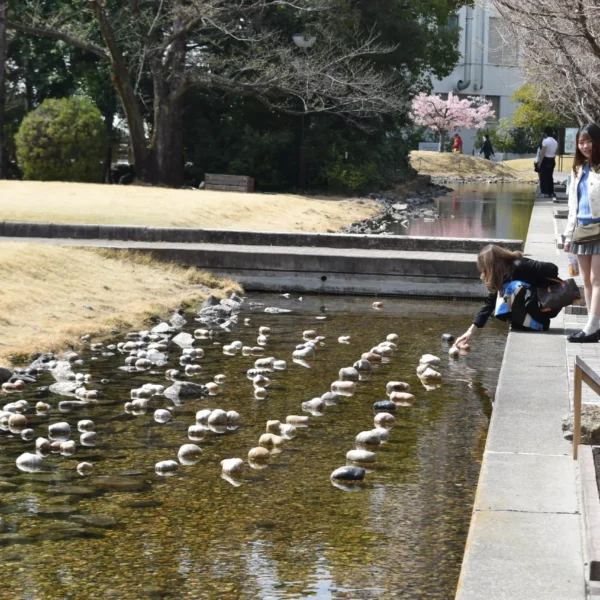
木子一十一_leewang studio_ノリタケの森ギャラリー_作品01

Small polystyrene stones drift on the stream at Noritake Garden, inviting a close look at how they differ from real stones.

木子一十一工作室於2026年參加月津港燈節,夜晚作品效果展示

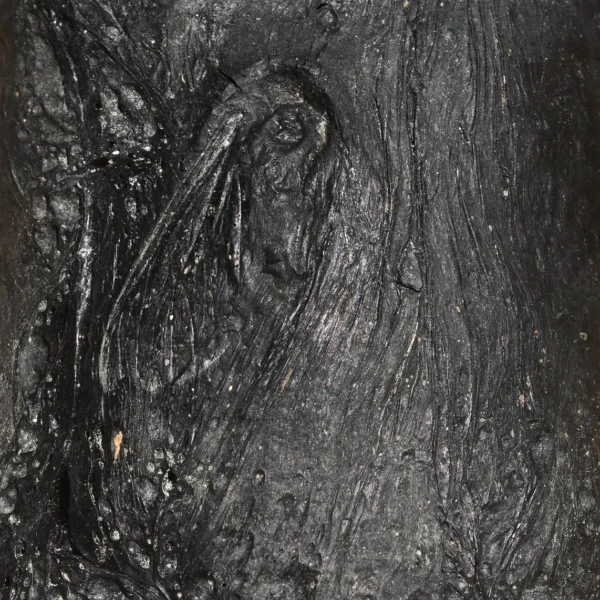
A shift in method: polystyrene recovered from the previous festival is softened with acetone and compressed, cementing dust like sedimentary rock. The series moves from imitating stone to making strata.

[2026]桃園地景藝術節_漂浮地層計畫

Inspired by shale formed in wetlands, the work responds to the Xucuo Port Wetland; its layered structure heightens the color differences between the strata.